Fast summary
- Best value for one rider who already owns a compatible bike: a direct-drive trainer.
- Best lower-cost dedicated setup: Zwift Ride with KICKR CORE 2, especially for Zwift or ROUVY users.
- Best broader multi-app dedicated path: KICKR BIKE SHIFT; buy Pro only when physical grade movement is a real priority.
- Measure fit range before comparing power accuracy. A bike that cannot reproduce your position is the wrong bike at any price.
- Price the complete room, three years of wear, subscriptions, and return logistics - not only the hardware box.
A direct-drive trainer and a dedicated smart bike can run the same structured workout, report the same core metrics, and make you equally fit. The expensive difference is everything around the workout: whether your outdoor bike is trapped indoors, how accurately the setup fits, how many people use it, and what happens when a proprietary part fails.
The default answer remains simple: if you own a compatible bike and are proving an indoor habit, buy the trainer. A smart bike earns its premium when removing setup friction, protecting an outdoor bike, or serving multiple riders will create enough extra completed sessions to matter.
The 60-second decision matrix
| Your situation | Best default | Why |
|---|---|---|
| Own a compatible bike; first indoor setup | Direct-drive trainer | Lowest hardware cost and the least irreversible decision |
| Ride indoors year-round; outdoor bike must stay ready | Dedicated smart bike | No mounting ritual and no outdoor-bike downtime |
| Two riders with different bikes or drivetrains | Adjustable smart bike or Cog-based trainer | Fewer cassette and axle conflicts |
| Need Zwift and ROUVY, not a broad app library | Zwift Ride + compatible trainer | Dedicated convenience at a lower entry price |
| Use several training apps and want road-style controls | KICKR BIKE SHIFT | Broader protocol support and configurable gearing |
| Physical climbing angle drives motivation | KICKR BIKE PRO | Motorized incline and decline are the differentiator |
| Apartment move likely within two years | Trainer | Smaller service and transport problem |
The cleanest tie-breaker is completed sessions. If removing a ten-minute setup ritual reliably creates another ride each week, convenience has training value. If the bike will become expensive furniture, it has none.
What you are actually buying
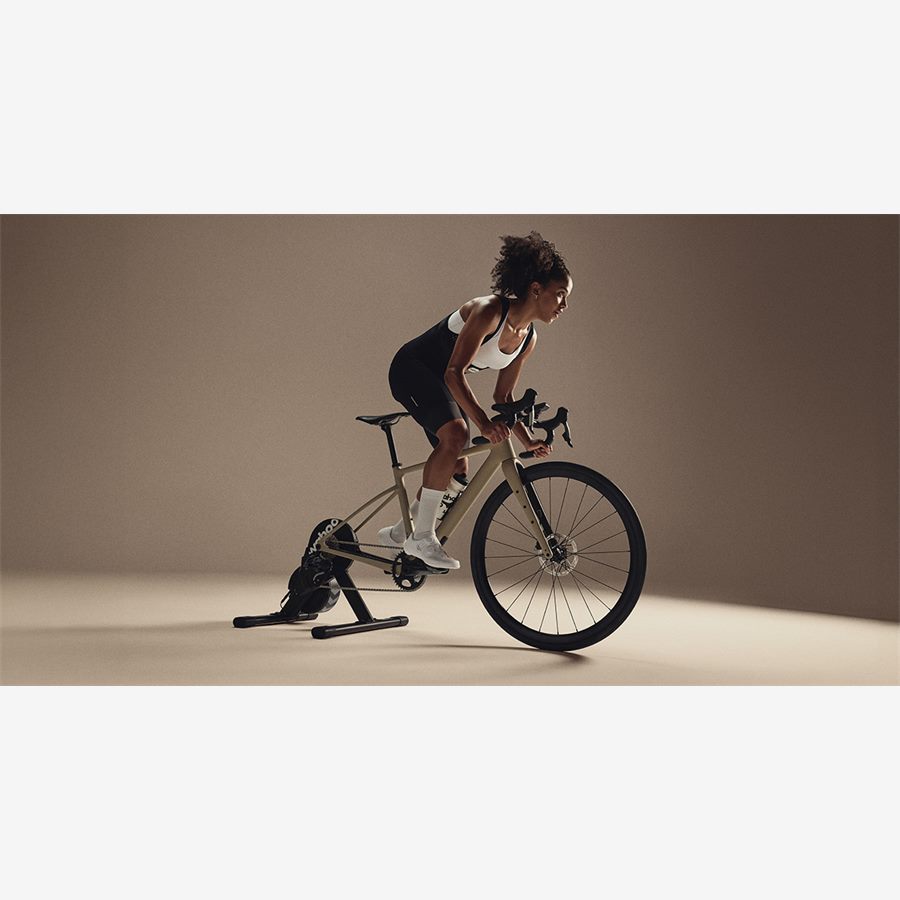
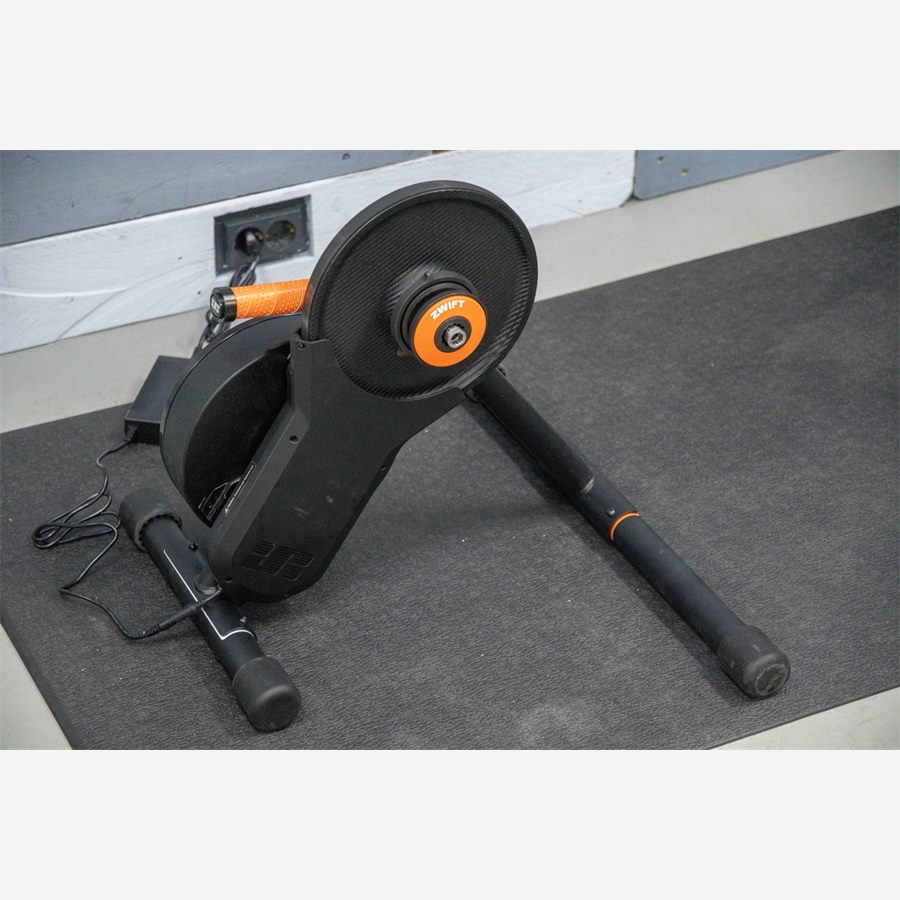
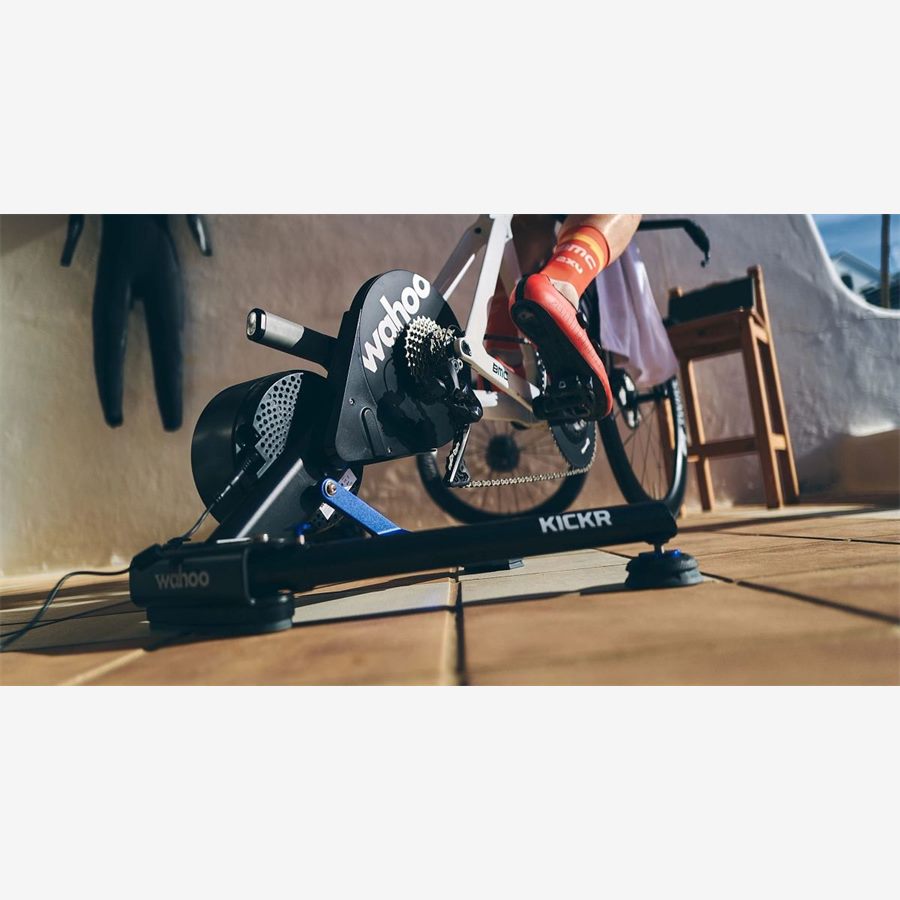
A direct-drive trainer replaces the rear wheel of a normal bicycle. The bicycle supplies the saddle, bars, crank length, gearing, and fit; the trainer supplies resistance, power measurement, and app control. That is why the trainer path feels familiar and costs less when you already own the right bike.
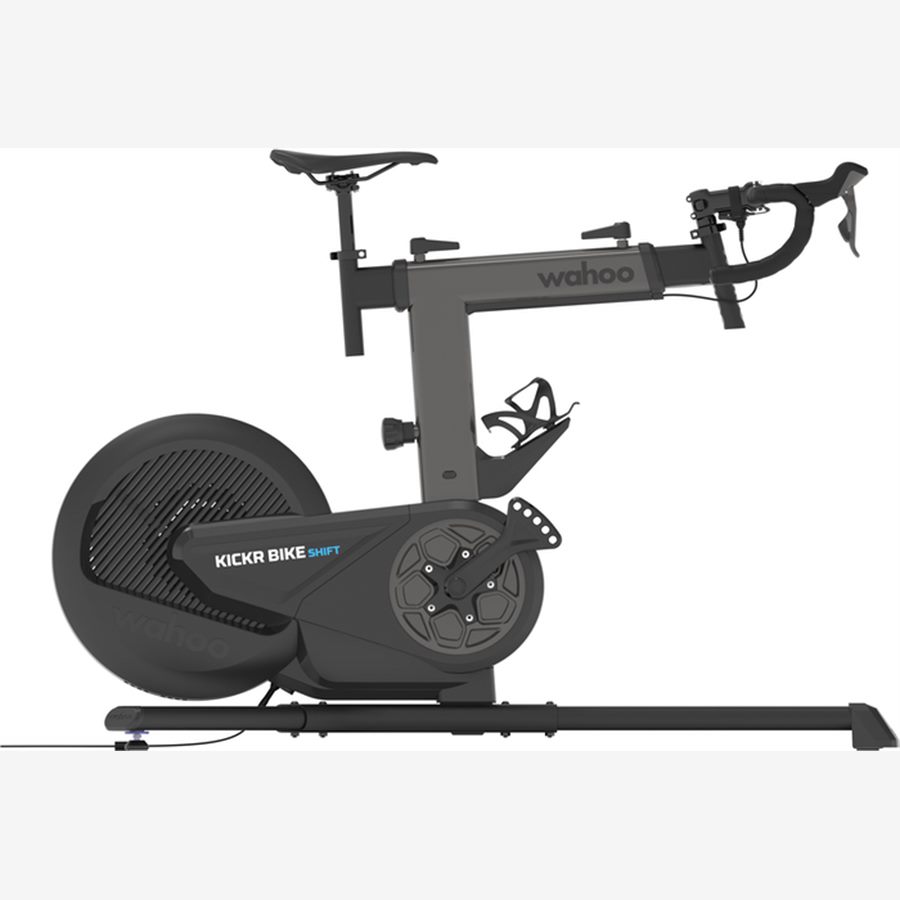
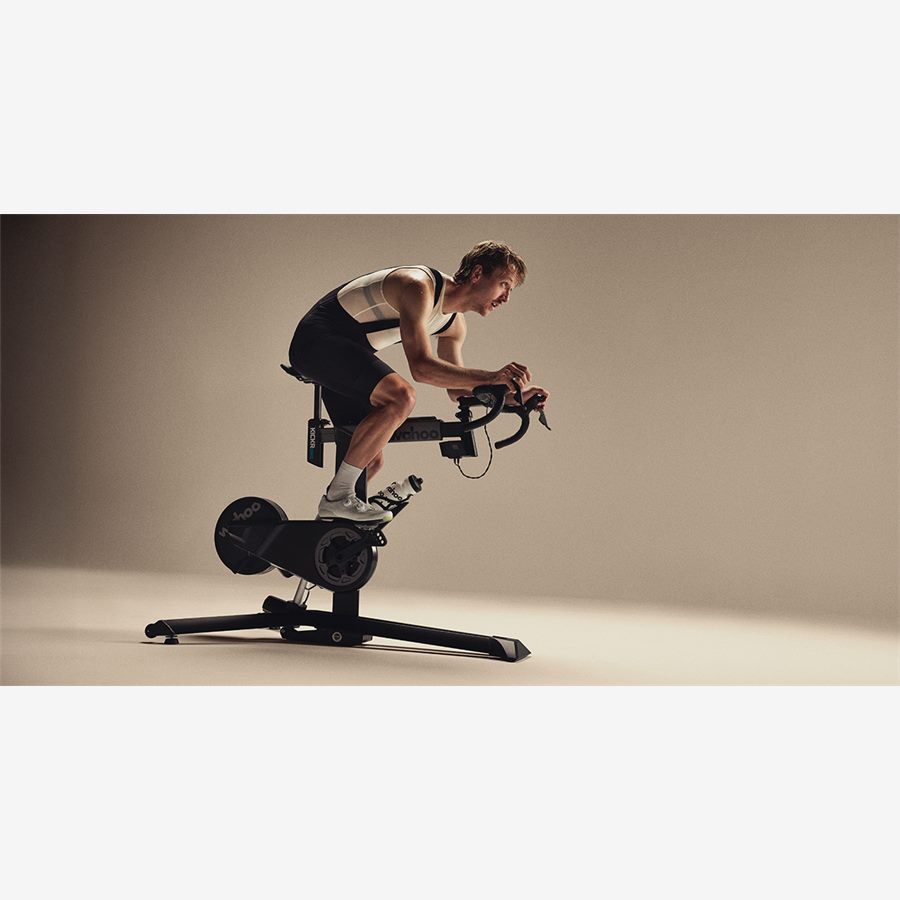
A smart bike combines the frame, contact points, resistance unit, power measurement, controls, and virtual drivetrain into one appliance. The expensive models do not contain a secret training stimulus. They buy readiness, adjustability, less wear on an outdoor machine, quieter virtual shifting, and in some cases physical grade movement.
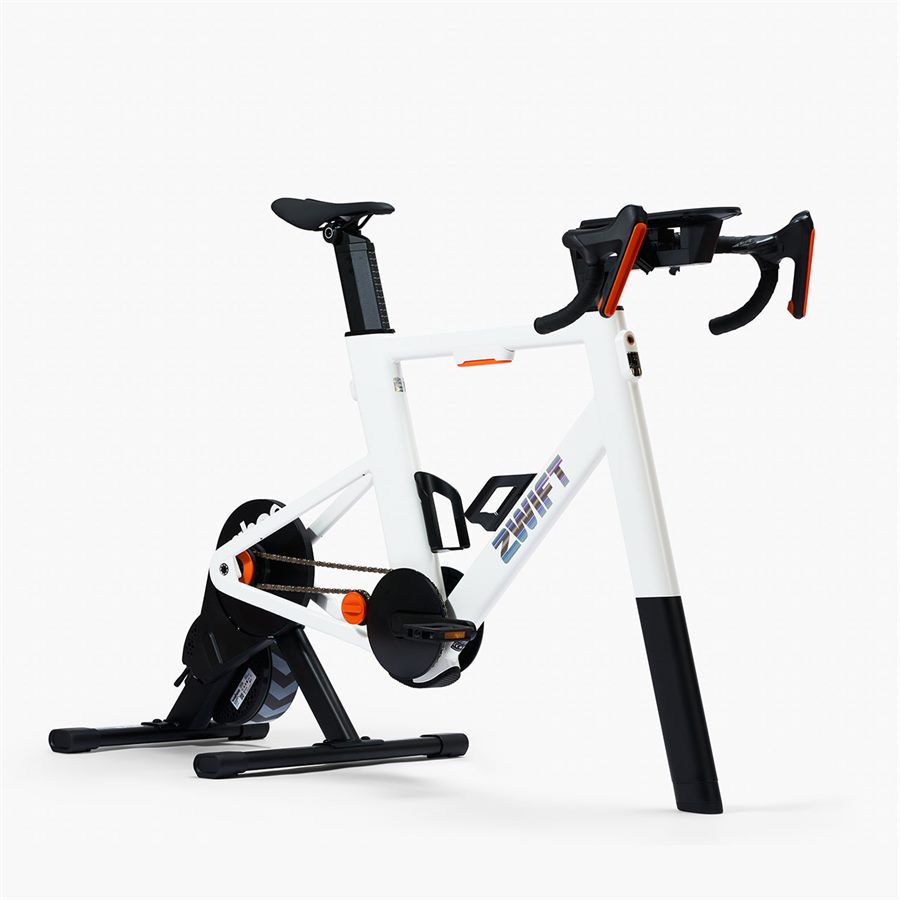
Zwift Ride sits between the categories. It is an adjustable smart frame mounted to a compatible trainer rather than a single sealed smart-bike chassis. That modularity lowers the dedicated-entry price and makes the resistance unit replaceable, but the integrated controls and shifting are designed around Zwift and now ROUVY rather than every training platform.
True cost: build a three-year ownership number
Reference list prices in August 2026 put a KICKR CORE 2 around $550, a Zwift Ride and CORE 2 bundle around $1,300, KICKR BIKE SHIFT around $2,550, and KICKR BIKE PRO around $4,000 before temporary sales. The hardware gap is obvious. The less obvious mistake is pretending the trainer uses a free bicycle.
If your current bike remains permanently mounted, assign a replacement or opportunity cost to it. If you remove it every weekend, assign time and drivetrain friction. Then add the same room costs to both paths: fan, mat, screen or device mount, sweat protection, electricity, and software. Subscriptions usually do not favor either path because both need an app unless you rely on free riding modes.
- Do not count a premium outdoor bike as free simply because you already own it.
- Do not count a smart bike as maintenance-free; sweat, bolts, adjustment points, controllers, chains, and bearings still need attention.
- Do not let a temporary sale erase a fit or compatibility problem.
- Keep the packaging until the return window and initial inspection period have passed.
| Cost line | Trainer + bike | Dedicated smart bike |
|---|---|---|
| Primary hardware | Lowest if a suitable bike already exists | Roughly $1,300-$4,000 by class |
| Bike allocation | Existing-bike wear or cost of a dedicated donor bike | Included in appliance price |
| Drivetrain wear | Chain, cassette or Cog; shifting alignment | Belt or virtual drivetrain varies; Zwift Ride still uses a chain |
| Room essentials | Fan, mat, device stand, towels | The same essentials still apply |
| Service event | Trainer can be removed and bike remains usable | Whole indoor setup may be unavailable |
| Moving or return | Smaller and usually easier to ship | Heavy freight, packing, collection, or restocking can matter |
Fit is the first hard constraint
A trainer preserves the geometry and contact points of the bicycle mounted to it. That is its strongest performance argument: your crank length, saddle, bar width, hood position, reach, and cleats can match the machine you race outdoors. The weakness is equally clear - another household rider needs another compatible bike or a full fit compromise.
Smart-bike height ranges are only screening numbers. The current Zwift Ride range is listed as 152-198 cm, while Wahoo lists 152-193 cm for BIKE SHIFT and BIKE PRO. Those ranges do not guarantee that a rider with long legs and a short torso, limited hip mobility, a very narrow preferred bar, or a non-standard crank length can reproduce a comfortable position.
Before buying, record saddle height from bottom-bracket center, saddle setback, saddle-to-bar reach, bar drop, crank length, saddle model, and cleat position. Check the manufacturer's adjustment limits against those measurements. If two people share the bike, record both sets and time a complete changeover.
| Fit factor | Trainer path | Smart-bike path |
|---|---|---|
| Saddle and bars | Exactly the mounted bicycle | Usually replaceable, but clamp and rail limits apply |
| Crank length | Exactly the bicycle crank | Fixed or multi-position depending on model |
| Stack and reach | Existing frame and cockpit | Adjustable within rails and posts |
| Between-user change | Swap complete bikes or compromise | Move 4-6 adjustment points |
| Fit repeatability | Automatic for one bicycle | Requires recorded settings and secure clamps |
Do not buy from rider-height range alone. Height cannot describe torso-to-leg proportion, mobility, saddle setback, bar preference, or an existing professional fit.
Daily friction and the outdoor-bike problem
The trainer is cheapest when the bike stays mounted. It becomes less attractive when that same bike must be washed after wet rides, carried through the house, have its rear wheel removed, and be realigned several times per week. A dedicated bike changes the first five minutes of every session: shoes on, fan on, app open, ride.
That convenience is most valuable to riders with short training windows, year-round indoor volume, an expensive race bike they want away from sweat, or a household schedule that punishes setup delay. It is less valuable when the trainer already lives under a dedicated older bike.
Virtual shifting changes the multi-bike calculation. A Cog-based trainer can accept bikes with different gear counts more easily than a conventional cassette setup, provided axle and frame compatibility still work. It reduces drivetrain mismatch; it does not remove the need to mount each bike correctly.
Training quality, ride feel, and racing
For ERG workouts, both categories can hold a target power. Accuracy claims of plus or minus one or two percent matter less than stable, repeatable data from the same device. A rider does not gain more aerobic adaptation because the power meter lives inside a $4,000 frame.
The differences appear in experience. Smart bikes can offer configurable virtual gearing, integrated buttons, strong sprint stability, and fewer chain shifts. KICKR BIKE PRO adds motorized grade movement, changing body angle on climbs and descents. Trainers preserve the flex, saddle, bars, and exact pedal system of your outdoor bike; rocker plates can add movement if desired.
Racers should prioritize low-latency connections, reliable controls, a stable sprint platform, and a power source consistent with outside racing. If outdoor power comes from pedals or a crank meter, recording that meter indoors alongside trainer control can expose offsets instead of discovering them on race day.
App support and platform lock-in
A standards-based trainer or Wahoo smart bike is the safer choice when you rotate among Zwift, TrainerRoad, ROUVY, MyWhoosh, TrainingPeaks Virtual, and other platforms. Bluetooth FTMS and ANT+ FE-C describe control and data transport, but integrated buttons, steering, braking, and virtual shifting may still be app-specific.
Zwift Ride's position changed in 2026: official support now lists the frame, Cog, Click, and virtual shifting as compatible with both Zwift and ROUVY. That is broader than its original Zwift-only role, but it is not the same as universal integrated-control support. Confirm the exact feature matrix, not merely whether the resistance unit can broadcast power.
| Question to verify | Why it matters |
|---|---|
| Can the app control resistance? | Required for ERG and simulated gradients |
| Do virtual gears work? | A single sprocket has no useful mechanical shifting fallback |
| Do steering and buttons work? | Integrated controls can lose value outside supported apps |
| Does Wi-Fi work with this app? | May improve reliability and free Bluetooth connections |
| Can an external power meter be used? | Important for indoor/outdoor data continuity |
Maintenance, service, and failure concentration
Trainers concentrate fewer touchpoints in the resistance unit but expose the mounted bicycle to sweat and drivetrain wear. Smart bikes remove wheel and cassette alignment rituals, yet add proprietary shifters, adjustment mechanisms, power supplies, controllers, belts or chains, and sometimes incline motors.
Official maintenance schedules make the point. Zwift instructs Ride owners to wipe the bike after every ride, inspect key fasteners after the first ten hours, maintain adjustment points, lubricate the chain, and check chain wear over time. Wahoo similarly calls for sweat removal and regular corrosion and fastener checks.
The practical difference is downtime. If a trainer fails, the bicycle can still ride outdoors and the trainer can often be shipped alone. If an integrated smart bike fails, the entire indoor station may be unavailable and freight handling becomes part of support. Check who supplies packaging, who pays shipping, whether a collection is available, and whether a restocking fee applies before purchase.
Our verdict by buyer type
| Buyer | Recommendation | Reason |
|---|---|---|
| Indoor-curious rider with a compatible bike | KICKR CORE 2 or Victory-class trainer | Best fitness and app access per dollar |
| Zwift/ROUVY-focused rider wanting dedicated convenience | Zwift Ride + CORE 2 | Lower dedicated price and modular resistance unit |
| Committed multi-app rider | KICKR BIKE SHIFT | Adjustable dedicated chassis without Pro's tilt premium |
| Climbing-experience enthusiast with a permanent room | KICKR BIKE PRO | Physical grade movement is the feature you are funding |
| Two riders, close fit, one small room | Adjustable smart bike | Quick recorded fit changes beat storing two bikes |
| Two riders, very different fits, both own bikes | Cog-based trainer or separate stations | Avoid repeated crank and cockpit compromises |
Best default: buy the trainer, a serious fan, and a training plan. Upgrade to a dedicated smart bike when your own usage proves that setup friction - not motivation or programming - is the remaining problem.
Pre-purchase checklist
- 1
Measure both the rider and the room
Record your current bike position, ceiling and floor clearance, doorway width, power-outlet location, and space needed to mount and service the unit.
- 2
Write down every app and control feature
Separate basic power broadcasting from ERG control, virtual shifting, steering, braking, and handlebar navigation.
- 3
Build a three-year cost sheet
Include the allocated bike, fan, mat, subscriptions, drivetrain parts, shipping, return risk, and accessories.
- 4
Plan a service event
Know how the product leaves the room, who can lift it, where packaging lives, and what you ride while it is unavailable.
- 5
Use a benefit-specific recommendation
Choose CORE 2 for value, Zwift Ride for lower-cost dedicated convenience, SHIFT for broad dedicated use, or Pro for physical grade - not because one is simply more expensive.
Key takeaways
- A smart bike and a good trainer can produce the same training stimulus; convenience, fit, and ownership are the real purchase variables.
- The trainer is the rational first buy when you own a compatible bicycle and have not proven year-round indoor volume.
- A dedicated bike becomes rational for short training windows, shared households, outdoor-bike availability, or a permanent high-volume pain cave.
- Zwift Ride now supports both Zwift and ROUVY, but broader app support and fully integrated controls still require feature-by-feature checking.
- Measure fit and plan a service return before letting power accuracy, maximum gradient, or a sale price decide.
FAQ
Not by itself. Both can control resistance and measure power for the same workout. A smart bike can indirectly help if its always-ready setup causes you to complete more consistent sessions.
Sources and further reading
Primary research, public guidance, and product documentation used to check the claims in this guide.
- Zwift Ride with KICKR CORE 2 specifications and current compatibilityZwift
- Zwift and ROUVY compatibility FAQZwift Support
- KICKR CORE 2 specifications and bike compatibilityWahoo
- KICKR BIKE SHIFT specifications and fit adjustmentsWahoo
- KICKR BIKE PRO product informationWahoo Support
- Caring for and maintaining Zwift RideZwift Support
- Wahoo return policy and warranty informationWahoo Support