Scores
4.7 overall
Best for
Riders who want one dedicated indoor bike, care about physical grade simulation, and will actually use a pain cave several days a week for years.
Skip if
Anyone still happy to dedicate an outdoor bike to a trainer, multi-person households needing cheap fit swaps, or budgets under ~$2,000 for indoor hardware.
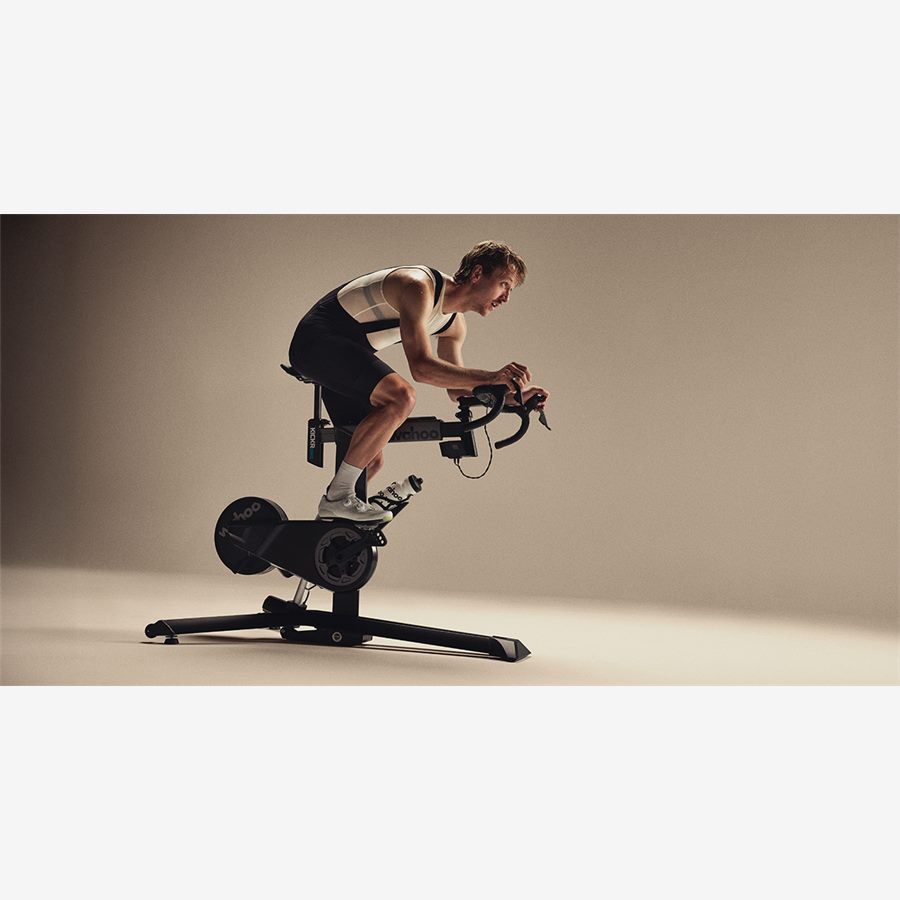
Smart bikes sit above trainers on price and convenience: no cassette swaps, no outdoor bike wear, no “I’ll set it up later.” The KICKR Bike Pro is the flagship expression of that idea in Wahoo’s 2026 lineup, evolving the earlier KICKR Bike V2 platform with refined contact points and the same core promise - motorized terrain plus integrated power.
This review breaks down what you actually get for roughly four thousand dollars: how the physical tilt changes indoor climbing, how power and ERG behave, what the footprint feels like in a real room, and when a trainer (or Zwift Ride) is the smarter spend.
Specs
- Brand
- Wahoo
- Max power
- 2500 W
- Power accuracy
- ±1%
- Grade simulation
- +20% / −15% physical tilt
- Connectivity
- Bluetooth, ANT+ FE-C, Wi‑Fi, Direct Connect
- Noise
- Quiet belt drive; incline motors audible on grade changes
- Weight
- ≈42 kg / 93 lb
- Platforms
- Zwift, TrainerRoad, Rouvy, MyWhoosh, and major FE-C apps
Manufacturer claims and editorial research. Confirm firmware and packaging before you buy.
Who the KICKR Bike Pro is actually for
Buy this if indoor training is a primary sport for you, not a winter stopgap. The value equation only closes when you ride it often enough that “always ready” beats “clamp my race bike again.”
Skip it if you already own a bike you love and mainly need accurate resistance. A KICKR Core 2 or V6 plus your frame delivers most structured training outcomes for a fraction of the price.
Best fit
Single-user pain caves, racers who want grade realism, and riders needing broader app support than Ride's Zwift/ROUVY integration.
Weak fit
Shared apartments where a folding trainer footprint matters more than a full second bike.
Ride feel and physical grade simulation
The headline feature remains physical tilt: the whole bike pitches to match virtual terrain (up to about +20% / −15% on the Pro class). Resistance still does most of the work, but the body angle change is the closest consumer product to outdoor climbing posture without leaving the room.
Virtual gearing (Reality Shift style workflows) removes the need for a traditional cassette on the bike itself. Shifting is electronic/virtual rather than mechanical derailleur - excellent for indoor maintenance, different from road muscle memory if you still race outdoors a lot.
Climbing
Physical incline plus resistance is more convincing than resistance-only trainers on long virtual climbs.
Descending
Decline modes are useful but still “indoor physics” - not a free-wheeling outdoor drop.
Standing efforts
A full bike frame feels more natural out of the saddle than many trainers, assuming the unit is leveled and solid on the floor.
If grade realism is the only reason you want a smart bike, demo or deeply research the Pro vs Shift. Many riders overpay for motors they use less than they imagined.
Power accuracy and training quality
Wahoo claims ±1% dual-sided power measurement on the Pro class. In practice, what matters is repeatability session to session for structured work - thresholds, over-unders, and race simulations inside Zwift or TrainerRoad.
ERG response on modern Wahoo smart bikes is fast enough for demanding workouts. Spikes and standing efforts will still show more variance than steady-state seats - true of every consumer smart trainer class.
| Dimension | KICKR Bike Pro | Typical DD trainer |
|---|---|---|
| Power claim | ±1% dual-sided class | ±1% to ±2% |
| Physical grade | Yes (motorized tilt) | No |
| Uses outdoor bike | No | Yes |
| Street price class | ≈ $4,000 | ≈ $450-$1,300 |
High-level category comparison - not a substitute for a full side-by-side on /compare.
Apps, setup, and day-to-day ownership
The Pro is platform-agnostic: pair over Bluetooth or ANT+ FE-C to Zwift, TrainerRoad, ROUVY, MyWhoosh, and other major apps. That is a real advantage over Ride's narrower Zwift/ROUVY integration if you split time across software.
Setup is mostly unbox, assemble residual parts, pair sensors, and calibrate incline motors. Fit range covers a wide height band; multi-rider homes should still plan saddle/bar adjustments as a routine, not a one-time set-and-forget.
Training apps are not included. Budget monthly software on top of the hardware if you do not already subscribe.
KICKR Bike Pro vs Shift vs Zwift Ride vs a trainer
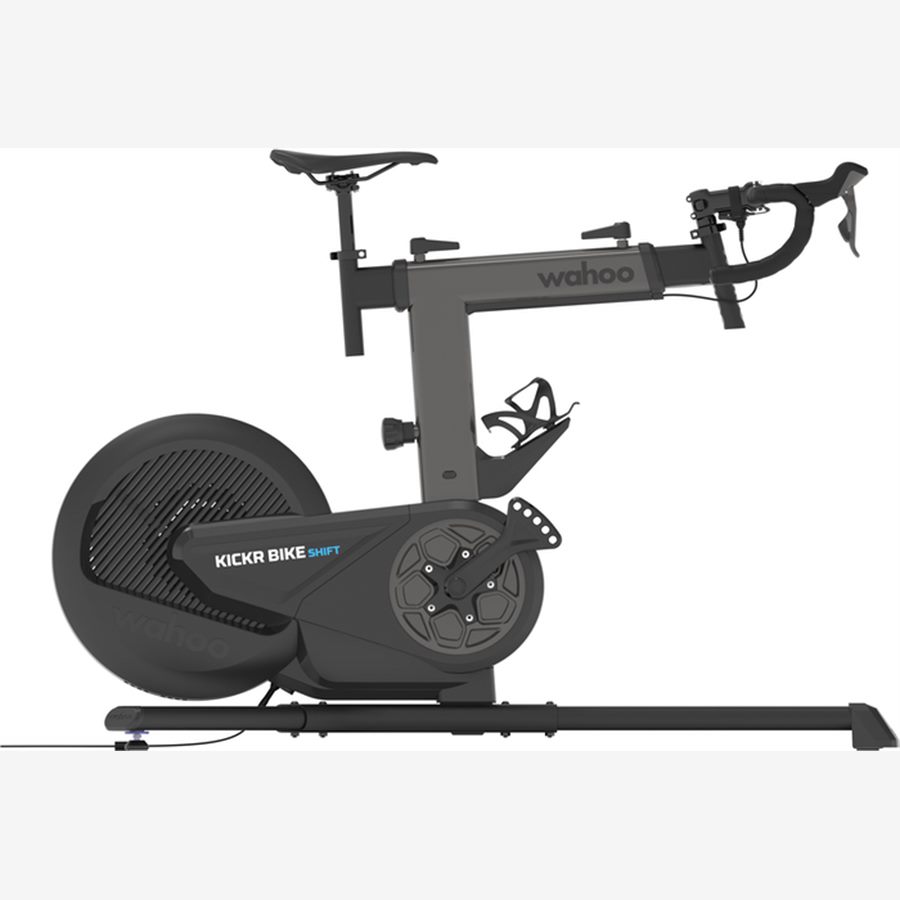
Pro vs Shift: pay for flagship realism and touchpoints on the Pro; buy Shift if you want the dedicated-bike lifestyle at a lower total.
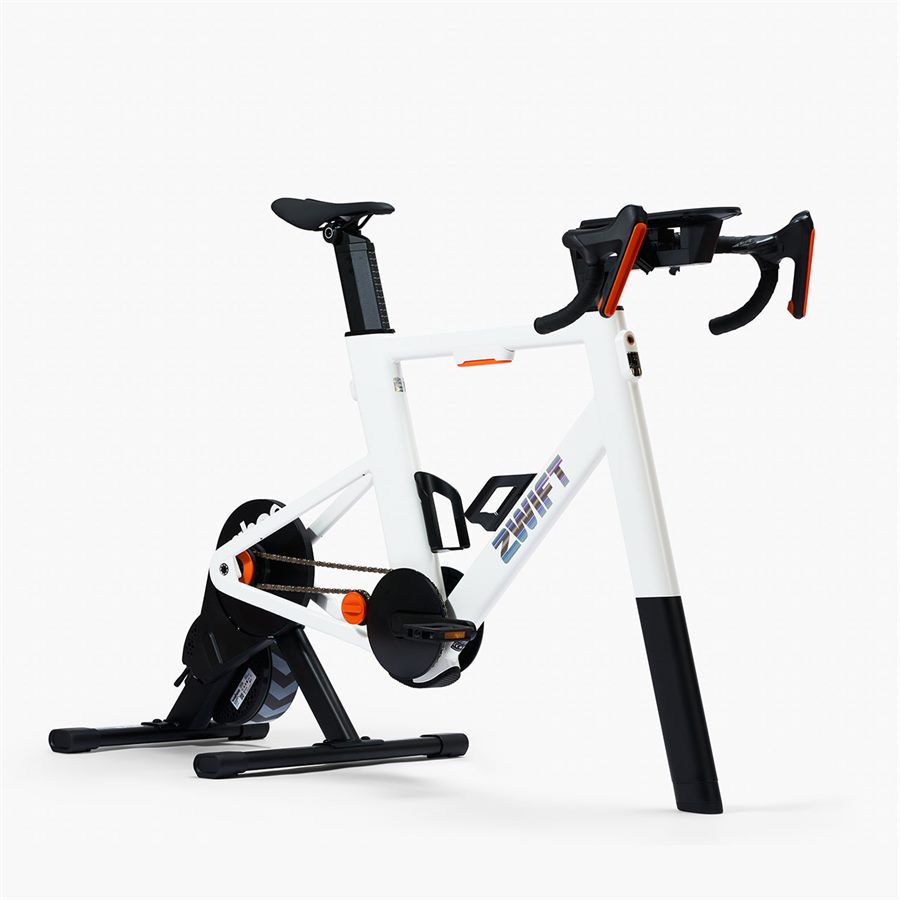
Pro vs Zwift Ride: Ride wins on price and integrated Zwift/ROUVY controls; Pro wins on broader app support and physical grade.
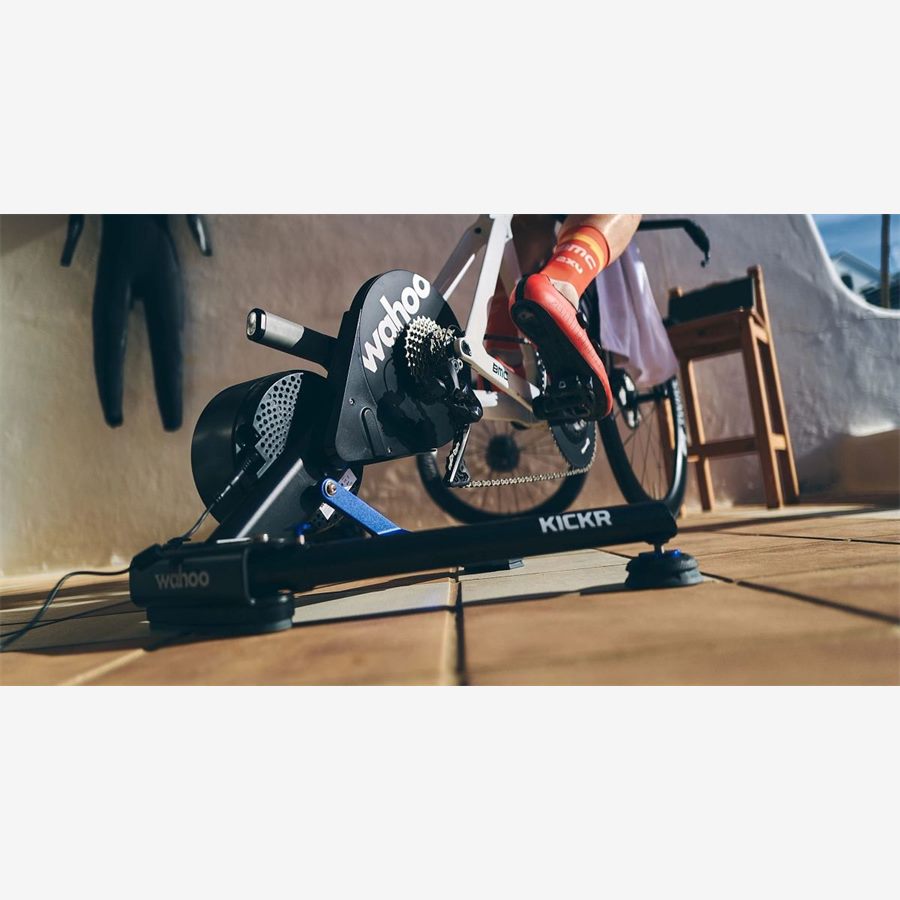
Pro vs trainer: trainers win on cost and dual-use outdoor bikes; Pro wins on convenience and climbing posture.
| Option | Approx. price | Best reason to pick it |
|---|---|---|
| KICKR Bike Pro | $3,999 | Max realism, multi-app smart bike |
| KICKR Bike Shift | $2,549 | Dedicated bike, better value |
| Zwift Ride + Core 2 | ≈ $1,300 | Best Zwift-native dedicated setup |
| KICKR Core 2 + your bike | ≈ $550+ | Best default structured training path |
Key takeaways
- You are buying convenience + physical grade simulation, not a magical training stimulus no trainer can provide.
- If you already own a good bike, a direct-drive trainer is still the rational first upgrade.
- Pro makes most sense when indoor is year-round primary training and multi-app flexibility matters.
- Software subscriptions are extra - include them in the true cost of ownership.
Pricing
The KICKR Bike Pro is sold as a premium single SKU. Street prices move with seasons; list sits at the top of the consumer smart-bike market.
KICKR Bike Pro
Recommended$3,999
Hardware only - apps sold separately
- Physical incline / decline
- Dual-sided power (±1% claim)
- Virtual gearing / Reality Shift class features
- Multi-app FE-C / Bluetooth support
Prices change frequently. Confirm current MSRP and bundles on the retailer before purchase. Incline motors, power claims, and included accessories can vary slightly by region and firmware generation.
Pros and cons
Pros
- Closest consumer feel to outdoor climbing indoors
- Excellent integrated power story for structured training
- Works across the major training apps
- Always-ready - no wheel-off ritual
Cons
- Costs as much as a serious road bike
- Heavy dedicated footprint
- Overkill if you only ride indoors casually
- App fees stack on top
FAQ
Only if physical grade simulation and a dedicated always-ready bike matter more to you than saving $2,500-$3,500 versus a Core 2 or V6 plus your existing bike.
Verdict
4.7 / 5
The KICKR Bike Pro is the reference all-in-one indoor smart bike for riders who have already decided that a second, indoor-only bike is worth it. The physical grade simulation is a genuine differentiator - not marketing fluff.
For everyone else, the market has better first moves: KICKR Core 2 or JetBlack Victory if you own a bike; Zwift Ride or KICKR Bike Shift if you want dedicated convenience without flagship pricing. Buy the Pro when indoor is your sport, not when you are still testing whether you like trainers.
Also consider
Related guides
Smart Bike vs. Direct-Drive Trainer: The Complete Buying Decision
Buying Guides · 18 min read
Best Indoor Smart Bikes 2026: Clear Picks by Budget
Roundups · 11 min read
Smart Bike Fit Guide: Match Your Outdoor Position Indoors
Setup & Installation · 14 min read
Smart Bike vs. Trainer Total Cost: A 3-Year Ownership Calculator
Buying Guides · 13 min read