The best beginner indoor cycling plan is deliberately less exciting than the workout library makes it look. Three consistent rides, enough recovery, and a pace you can repeat next week will build more useful fitness than six hard sessions followed by a ten-day layoff.
This four-week plan is a starting framework for a generally healthy adult who wants to build an aerobic habit on an indoor bike or smart trainer. It is not medical advice and does not replace a clinician's guidance if you have symptoms, a health condition, or a long break from exercise.
Quick answer: ride three times per week and protect the easy days
Start with two easy aerobic rides and one controlled quality ride each week. Keep at least one rest day between harder sessions, and finish each ride feeling that you could have done a little more. The plan becomes useful when you can repeat it for four weeks without needing a rescue week.
Use the talk test if you do not have reliable zones: easy aerobic work should allow short conversation in full sentences; controlled intervals should feel purposeful but never like a sprint. Power targets can make the plan repeatable, but they are optional.
| Week | Ride 1 | Ride 2 | Ride 3 | Approx. total |
|---|---|---|---|---|
| 1 | 25 min easy | 20 min easy + 4 x 30 sec brisk | 30 min easy | 75 min |
| 2 | 30 min easy | 25 min with 4 x 2 min controlled | 35 min easy | 90 min |
| 3 | 35 min easy | 30 min with 5 x 3 min controlled | 40 min easy | 105 min |
| 4 | 30 min easy | 20 min relaxed | 45 min easy or repeat week 3 | 95 min |
Intensity language without a lab test
| Label | How it should feel | What to watch |
|---|---|---|
| Easy aerobic | You can speak in sentences; breathing is controlled. | Do not let every ride drift into medium-hard. |
| Controlled | Noticeably harder, but repeatable and never frantic. | Finish the final interval with form intact. |
| Brisk opener | A short acceleration, not a sprint or test. | Recover fully before the next one. |
| Rest | No training, easy walking, or mobility if useful. | Rest is part of the plan. |
If you have a recent FTP, keep most beginner work below about 75 percent of FTP and use the app's zone labels. If you do not, use breathing and perceived effort instead of reverse-engineering precision.
How to ride each session
- 1
Easy aerobic ride
Ride smoothly at a pace you can repeat. Keep resistance light enough that cadence is comfortable and breathing stays controlled. Add five minutes easy at the end.
- 2
Brisk-opener ride
After ten minutes easy, add four 30-second accelerations with at least two minutes easy between them. These are technique and leg-speed practice, not maximal efforts.
- 3
Controlled-interval ride
Warm up for ten minutes, then ride the listed two- or three-minute blocks at a firm but repeatable pace. Recover easily between blocks and cool down.
- 4
Longer easy ride
Keep the effort conversational and add time only if posture, cadence, and breathing remain comfortable. Stop if heat or form becomes a problem.
Smart-trainer setup for a beginner
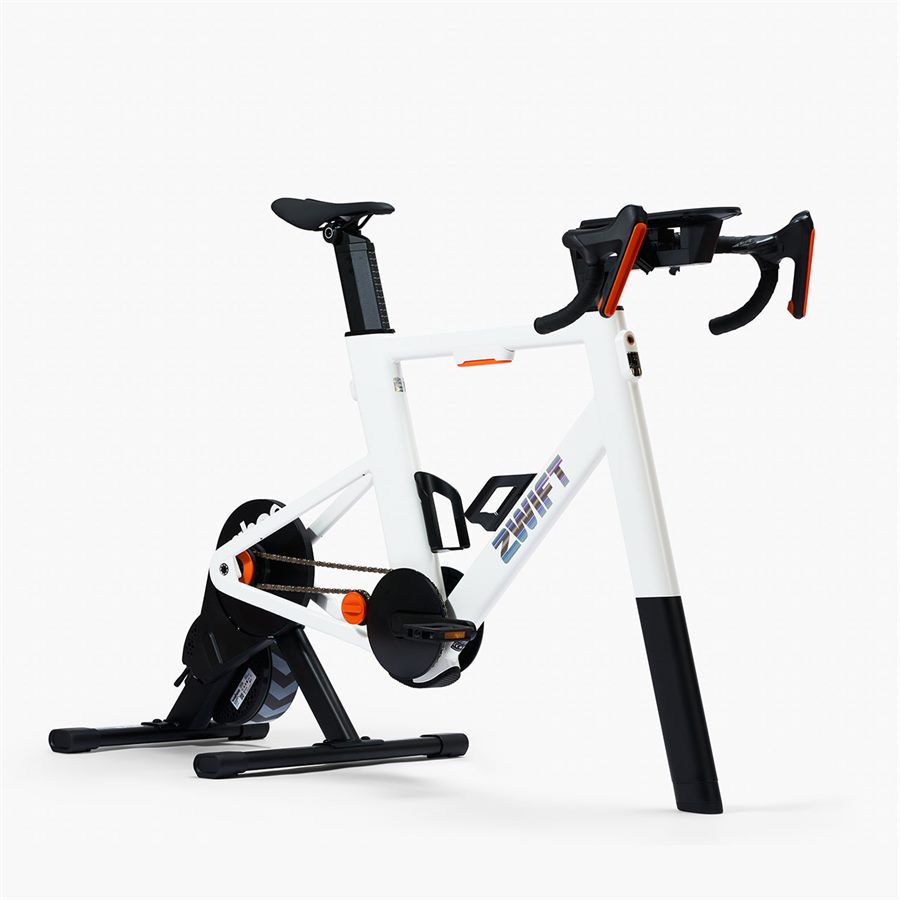
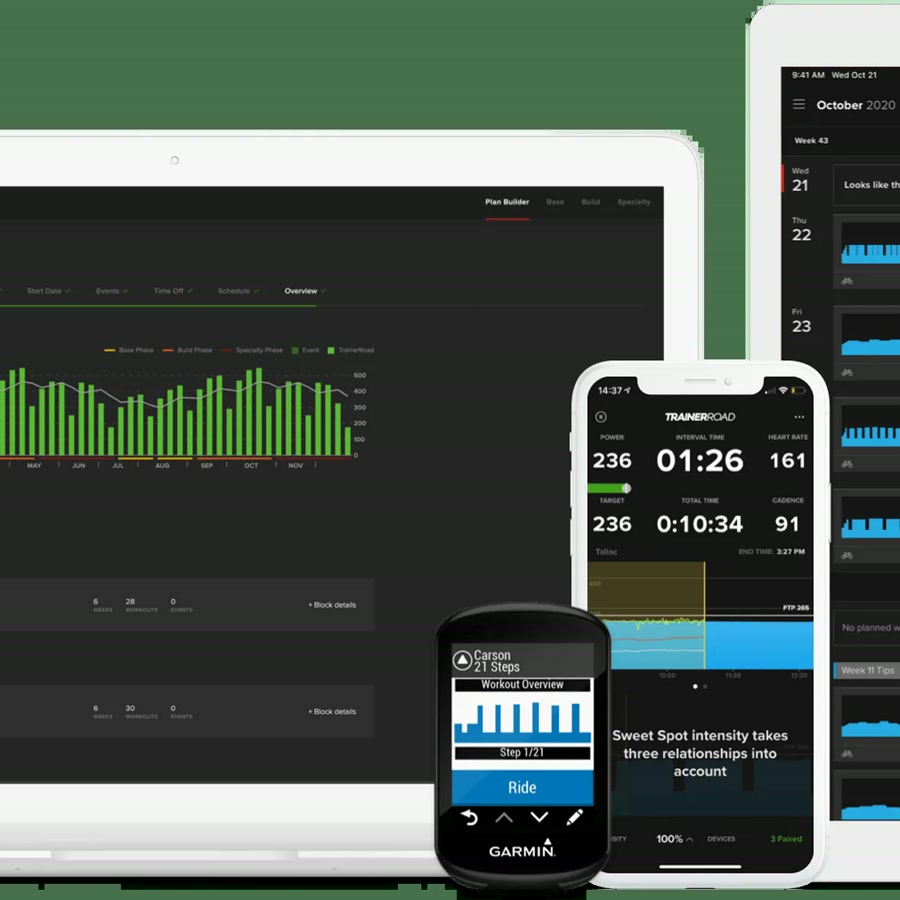
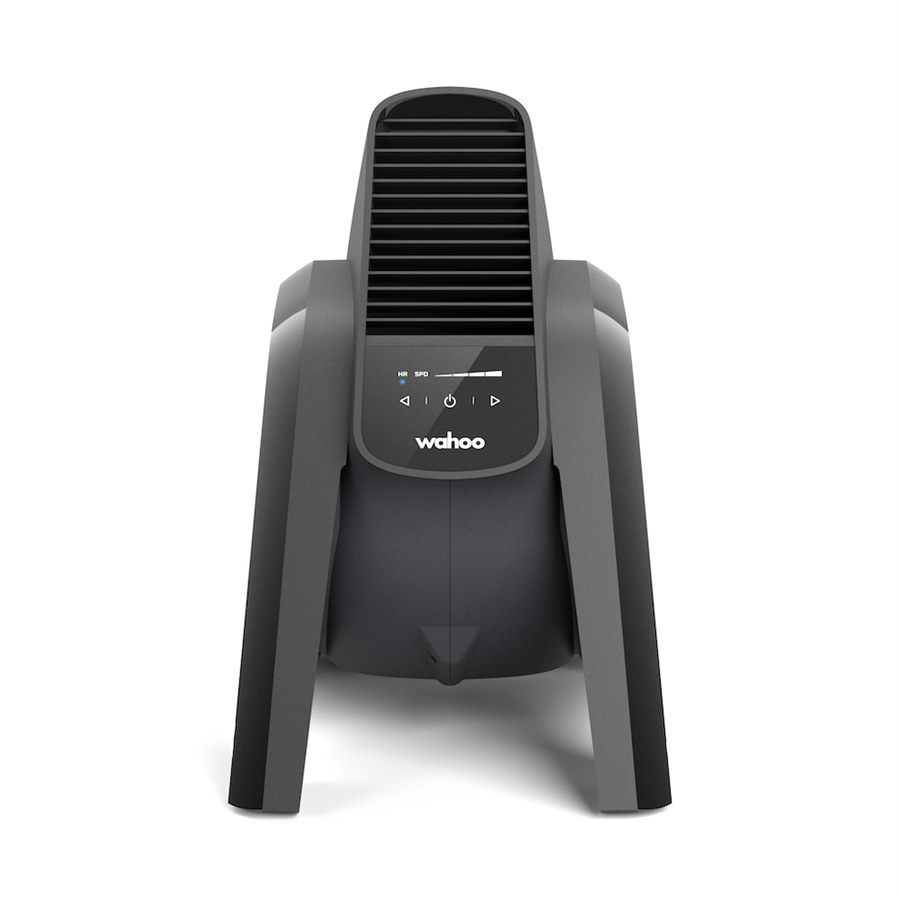
Pair the trainer as a controllable device and a power source in the app you use. If you ride a workout in ERG mode, begin in a comfortable middle gear and keep cadence smooth. A fan aimed at your torso matters more than a clever dashboard because indoor heat makes easy power feel hard quickly.
Keep the first month technically boring: one app controls the trainer, firmware is current, the bike is stable, and your device has a reliable connection. You are building the habit and learning the room, not optimizing every data field.
- Place the bike and trainer on a stable, level surface.
- Use a towel and fan before the room feels hot.
- Keep water within reach and stop to adjust the setup if anything hurts.
- Use a training mat if vibration, sweat, or floor protection is a concern.
How to progress after four weeks
Progress one variable at a time. Add five to ten minutes to one easy ride, add one controlled interval, or move from three rides to four only when the current schedule feels routine. More time is usually the cleanest first progression; more intensity is not automatically better.
After the first month, choose a direction: build a longer endurance base, follow a structured plan, or add one performance goal such as an FTP test. Keep an easy day after any session that leaves your legs heavy.
| If your goal is... | Next progression |
|---|---|
| General fitness | Add 5-10 minutes to the longest easy ride. |
| Weight management | Build consistent weekly activity and support it with sustainable nutrition. |
| Raise FTP | Keep two easy rides and add one structured threshold session. |
| Prepare for a long ride | Extend the longest easy ride gradually and practice fueling. |
Recovery, pain, and when to stop
Normal training discomfort is muscular effort and elevated breathing that settles when the interval ends. Sharp pain, joint pain, dizziness, faintness, chest pain, or unusual shortness of breath is different. Stop and get appropriate medical guidance.
Sleep, food, hydration, and rest are part of the plan. If resting heart rate is elevated for several mornings, easy pace feels unusually hard, or mood and sleep deteriorate, reduce the load before adding another workout.
This plan assumes you are healthy enough for moderate exercise. If returning after illness, pregnant, taking medication that affects heart rate, or managing a known condition, ask a qualified clinician how to begin.
Key takeaways
- Three repeatable rides beat an ambitious schedule you cannot recover from.
- Make most work easy and use one controlled quality session to learn pacing.
- Progress time before intensity, and change one variable at a time.
- Cooling, hydration, bike fit, and recovery are performance tools from day one.
- Stop for sharp pain, dizziness, chest symptoms, or unusual breathing and seek appropriate care.
FAQ
Three days is a practical starting point for many beginners because it leaves recovery between sessions. Two days can still build a habit, while a fourth easy day can be added later.
Sources and further reading
Primary research, public guidance, and product documentation used to check the claims in this guide.