VO2 max is the single number that sets the ceiling on how much oxygen your body can convert into usable energy per minute. Everything else you train, threshold power, sustainable pace, how long you can hold a wheel, is a percentage of that ceiling. Raise the ceiling and every sustainable effort below it gets easier by comparison, even if you never train them directly.
The problem is that raising VO2 max requires a fairly narrow, fairly brutal training stimulus, and outdoor riding is a bad tool for hitting it precisely. Traffic lights break intervals. Descents let you coast through the exact minutes that were supposed to hurt. Wind adds noise to your power file. A smart trainer running ERG mode removes all of that, which is the main reason indoor VO2 max work tends to produce cleaner results than the equivalent outdoor session.
What VO2 max actually measures, and why it's a ceiling, not a plan
VO2 max is the maximum rate at which your body can take in, transport, and use oxygen during maximal exertion, measured in milliliters of oxygen per kilogram of body weight per minute. It's determined by a combination of stroke volume (how much blood your heart pumps per beat), the oxygen-carrying capacity of your blood, and how efficiently your muscles extract and use that oxygen at the mitochondrial level.
A high VO2 max doesn't make you fast on its own. Plenty of riders with excellent VO2 max numbers get dropped by riders with lower ones, because what actually determines race and ride performance is what percentage of that ceiling you can sustain for a given duration, which is closer to what FTP measures. Think of VO2 max as the size of the engine and threshold as how much of that engine you can run continuously without overheating. Training VO2 max raises the engine size; training threshold teaches you to use more of it.
That's also why VO2 max intervals are worth doing even if your goal is a threshold-limited event like a century ride or a Zwift race decided by sustained power. A bigger ceiling makes the same sustained percentage easier in absolute terms.
The Norwegian 4x4 protocol
The most heavily studied VO2 max protocol in endurance sport research comes out of the Norwegian University of Science and Technology (NTNU), built on work led by exercise physiologist Jan Helgerud. The structure is simple to describe and unpleasant to execute: four intervals of four minutes each, at an intensity that drives you close to your maximum heart rate, separated by active recovery.
Studies using this protocol on runners and cyclists have reported VO2 max gains in the range of 7 to 10 percent over roughly eight weeks of consistent application, which is a large adaptation for a training change that only touches the training week for 16 total hard minutes.
| Parameter | Target |
|---|---|
| Interval duration | 4 minutes, x4 |
| Intensity (power) | ~106-120% of FTP |
| Intensity (heart rate) | 90-95% of max HR |
| Recovery between intervals | 3-4 minutes, easy spin |
| Sessions per week | 1-2 |
| Minimum recovery between sessions | 48-72 hours |
Ranges reflect the published protocol and common coaching interpretations; treat FTP percentages as a starting point and adjust by feel and heart rate response.
Heart rate lags power by 60-90 seconds at this intensity. Don't chase a heart rate number in the first two minutes of an interval; start on power and let heart rate catch up. If it never gets close to 90% of max by minute three, the power target was probably too low.
Why a smart trainer is arguably the better tool for this specific protocol
Norwegian 4x4 punishes inconsistent pacing. The whole point is spending four continuous minutes at a very high fraction of VO2 max; if the first 90 seconds are too easy because you're finding your effort, or the last minute falls off because a false flat turned into a headwind, you've trained a shorter, less effective interval than the one on paper.
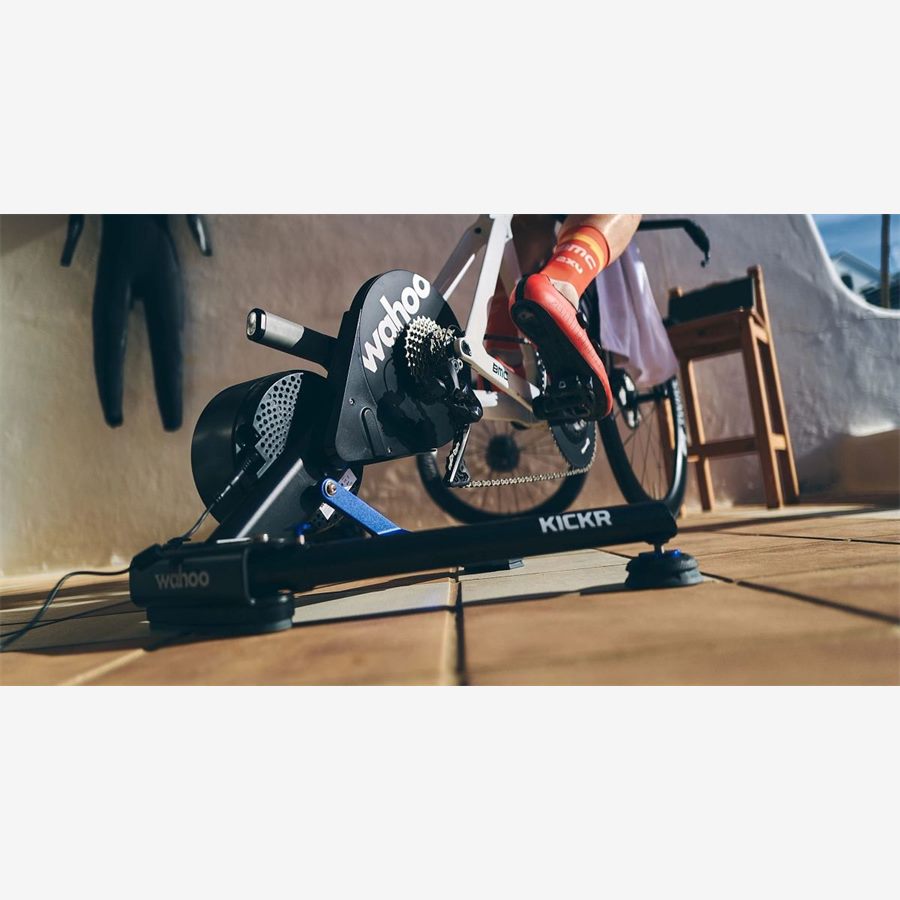
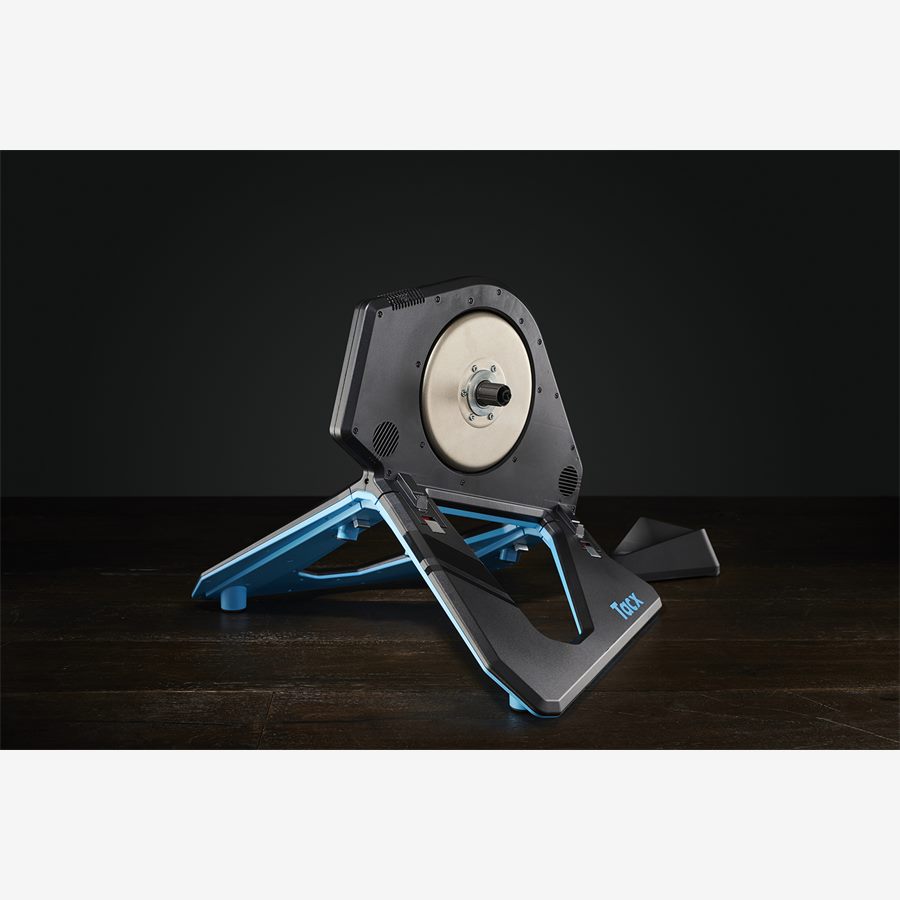
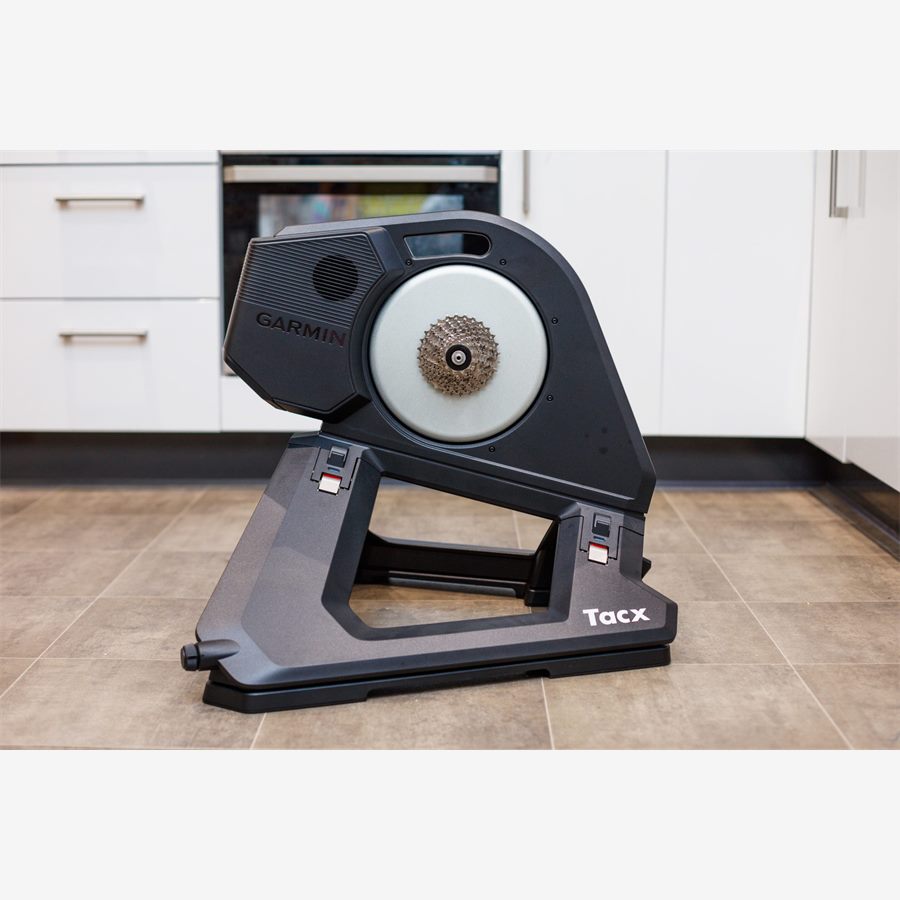
ERG mode removes that variable entirely, at the cost of taking away your ability to freewheel through the hard part. Set a target watt, the trainer holds it regardless of cadence, gearing, or how badly you want to back off. That's exactly the discipline this protocol is trying to enforce. See our guide to ERG mode for the setup details and the cadence-management skill that makes it tolerable under real load.
The tradeoff is that ERG mode can feel mechanically harder than the same power outdoors, because there's no momentum to surf and no downhill to recover on. If you've never done 4x4 in ERG before, expect your realistic power target to be 5-10% below what you'd guess from an outdoor threshold test.
4x4 vs. 4x8: when the longer interval wins
Norwegian 4x4 isn't the only well-supported structure. Research from exercise physiologist Stephen Seiler comparing interval durations found that 4x8-minute intervals, at a slightly lower intensity than 4x4, produced better adaptations for many athletes than either 4x4 or 4x16 minute formats. The mechanism is accumulated time near VO2 max: a slightly lower intensity lets you hold the effort longer, and total minutes spent near the ceiling ends up mattering more than how hard any single minute was.
In practice, this means 4x8 tends to suit riders who can pace a long steady effort well but struggle to hit true 90%+ max heart rate repeatedly in short bursts, while 4x4 suits riders who recover fast between efforts and prefer the psychological simplicity of a shorter, harder interval.
| Format | Power target | Best for |
|---|---|---|
| 4x4 min | 106-120% FTP | Riders who recover quickly; shorter total session |
| 4x8 min | ~100-106% FTP | Riders who pace well; more total time near VO2 max |
| 4x16 min | ~95-100% FTP | Generally outperformed by 4x8 in Seiler's comparisons for VO2 max specifically |
How often, and what the rest of the week should look like
Cap VO2 max sessions at one or two per week, with 48-72 hours between them. This isn't caution for its own sake; the interval only produces its intended adaptation if you arrive close to fully recovered, and the neuromuscular and cardiovascular fatigue from a real 4x4 session takes longer to clear than the legs alone suggest.
The other 5-6 training days shouldn't be filled with more intensity. The polarized training model, which has the strongest research support of any structured approach, puts roughly 80% of total training time at low, conversational intensity (see our Zone 2 guide) and concentrates the remaining 20% at genuinely hard efforts like this one. Riders who fill the gaps with moderate 'medium-hard' rides, fast enough to be tiring but not hard enough to drive VO2 max adaptation, tend to plateau. That middle intensity has a name in coaching circles: the gray zone. It's the single most common mistake in self-coached indoor training.
- 1-2 VO2 max sessions per week, never on consecutive days.
- Everything else easy enough to hold a conversation, or genuinely easy spinning.
- Resist the urge to turn recovery rides into tempo rides. That's what erodes the contrast the protocol depends on.
A full Norwegian 4x4 session, start to finish
- 1
Warm up for 15-20 minutes
Easy spinning building to 3-4 short accelerations of 20-30 seconds near threshold, with full recovery between them. Skipping this makes the first interval feel far worse than the rest.
- 2
Interval 1: 4 minutes at target power
Settle into the target within the first 30 seconds. Expect heart rate to still be climbing at the end of the interval; that's normal.
- 3
Recovery: 3-4 minutes easy
Very light spinning, not a full stop. Heart rate should drop meaningfully but won't fully recover to resting before the next interval starts, which is the point.
- 4
Repeat for intervals 2-4
Expect intervals 2 and 3 to feel like the hardest of the session. Interval 4 often feels marginally easier purely from knowing it's the last one.
- 5
Cool down for 10-15 minutes
Easy spin until heart rate drops well below 60% of max before you get off the bike.
Signs you're doing too much of this
- Your power target for the same session starts dropping week over week instead of holding or rising.
- Resting heart rate creeps up by more than a few beats over several consecutive mornings (see our resting heart rate guide for what that actually indicates).
- Easy rides stop feeling easy; your 'recovery pace' heart rate drifts higher for the same power.
- You dread the session before you've even started it. Some pre-interval dread is normal; dreading every hard session for weeks is not.
If two or more of these show up together, take an extra easy week before adding more VO2 max work. More intervals on top of unresolved fatigue produces smaller gains, not bigger ones.
Key takeaways
- VO2 max sets your aerobic ceiling; threshold determines how much of it you can actually use.
- Norwegian 4x4: 4 minutes at 106-120% FTP / 90-95% max HR, x4, with 3-4 minute recoveries.
- 4x8 at a slightly lower intensity often beats 4x4 for total time near VO2 max, especially for riders who pace well.
- ERG mode is well-suited to this protocol precisely because it removes the ability to coast through the hard minutes.
- 1-2 sessions per week maximum, with the rest of the week genuinely easy. Filling the gaps with moderate efforts is the most common way to blunt the adaptation.
FAQ
One to two sessions per week, with at least 48 hours between them and the rest of the week kept deliberately easy. More frequent VO2 max work tends to accumulate fatigue faster than it accumulates fitness.