Zone 2 became the most talked-about intensity in endurance training for a reason: it's the zone associated with building the aerobic base that everything harder gets layered on top of, and it's low-fatigue enough to do often without digging a recovery hole. It's also become the most oversold intensity in endurance training, with claims about mitochondrial magic that outrun what the evidence actually supports.
This guide covers both halves: how to actually execute Zone 2 correctly on a smart trainer, where indoor riding creates pacing problems outdoor riding doesn't, and what the current research does and doesn't back up so you're not training on marketing copy.
What Zone 2 actually is
Zone 2 sits at roughly 60-70% of FTP, or about 60-70% of heart rate reserve, depending on which model you use. The practical test is simpler than either number: you should be able to hold a full conversation in complete sentences without gasping for breath between them. If you can only manage short phrases, you're in Zone 3 no matter what your power meter says.
Physiologically, this intensity sits below the point where lactate starts accumulating faster than your body can clear it, which is why it's sustainable for long durations without the deep fatigue cost of harder efforts.
Why it became the internet's favorite training zone
The case for Zone 2 rests on a real physiological mechanism: at low intensity, your muscles derive energy predominantly from oxidizing free fatty acids, while at higher intensities the mix shifts toward carbohydrate. Training consistently at this intensity is associated with increases in mitochondrial density and the enzymatic machinery that supports fat oxidation, which in theory raises the intensity you can sustain before switching over to carb-burning, extending how long you can ride hard before bonking.
It's also simply sustainable. You can do far more total hours at Zone 2 than at threshold or above without digging into recovery debt, and total aerobic volume is one of the more reliable predictors of endurance performance over a training year.
The pushback worth knowing about
A 2025 narrative review examining the mitochondrial and cardiorespiratory evidence behind Zone 2 training concluded that current evidence does not clearly support Zone 2 as uniquely optimal for mitochondrial or fatty-acid oxidative adaptations compared to other intensities. Some of the research prioritizing higher-intensity work found comparable or better cardiometabolic returns, particularly for athletes without the training time to log large low-intensity volume.
That doesn't mean Zone 2 is useless, far from it. It means the specific claim that it's the singularly best intensity for mitochondrial adaptation is weaker than the internet consensus suggests. What Zone 2 unambiguously delivers is high training volume at low fatigue cost, and volume itself has strong evidence behind it. If you have the hours, Zone 2 is still one of the best ways to spend them. If you don't, the evidence doesn't support treating it as irreplaceable at the expense of higher-intensity work.
Translation: do Zone 2 because it lets you accumulate volume without frying your legs for the next hard session, not because it's a magic mitochondrial switch that other intensities can't flip.
How much, and how often
Individual sessions of 45-90 minutes are typical for time-constrained riders; longer sessions (2+ hours) add value mainly once your weekly volume is already high enough that more intensity would compromise recovery.
| Weekly training time available | Zone 2 allocation |
|---|---|
| 3-5 hours | 1-2 hours, prioritize consistency over single long rides |
| 6-9 hours | 3-5 hours across 2-4 sessions |
| 10+ hours | 6-8+ hours; this is where Zone 2 volume starts to dominate the week |
General guidance, not a prescription. Riders with less training time overall generally get more relative return from prioritizing intensity over Zone 2 volume.
Where indoor Zone 2 goes wrong
Outdoors, terrain and traffic naturally cap your intensity in ways that keep you honest. Indoors, on a smart trainer with nothing to look at but a wall or a screen, riders drift into two opposite failure modes.
- Pacing too hard: boredom and a stationary bike make it tempting to push into Zone 3 without noticing, especially without a fan and rising core temperature nudging heart rate up independent of effort.
- Pacing too easy: without road feedback, some riders coast well under Zone 2 power while their heart rate reads Zone 2 from heat buildup, training neither zone properly.
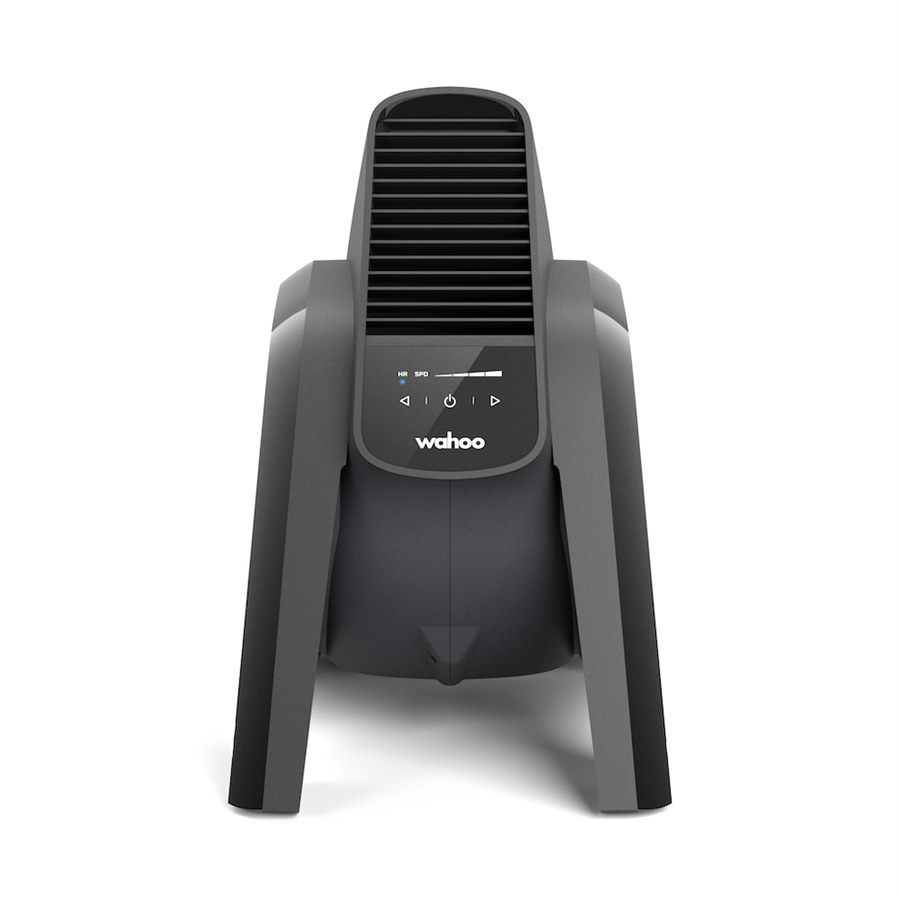
- Heat management is not optional for long indoor Zone 2 rides. Without real airflow, core temperature climbs steadily, dragging heart rate up at a constant power output, which makes heart-rate-based pacing unreliable past 30-40 minutes unless you're running a real fan.
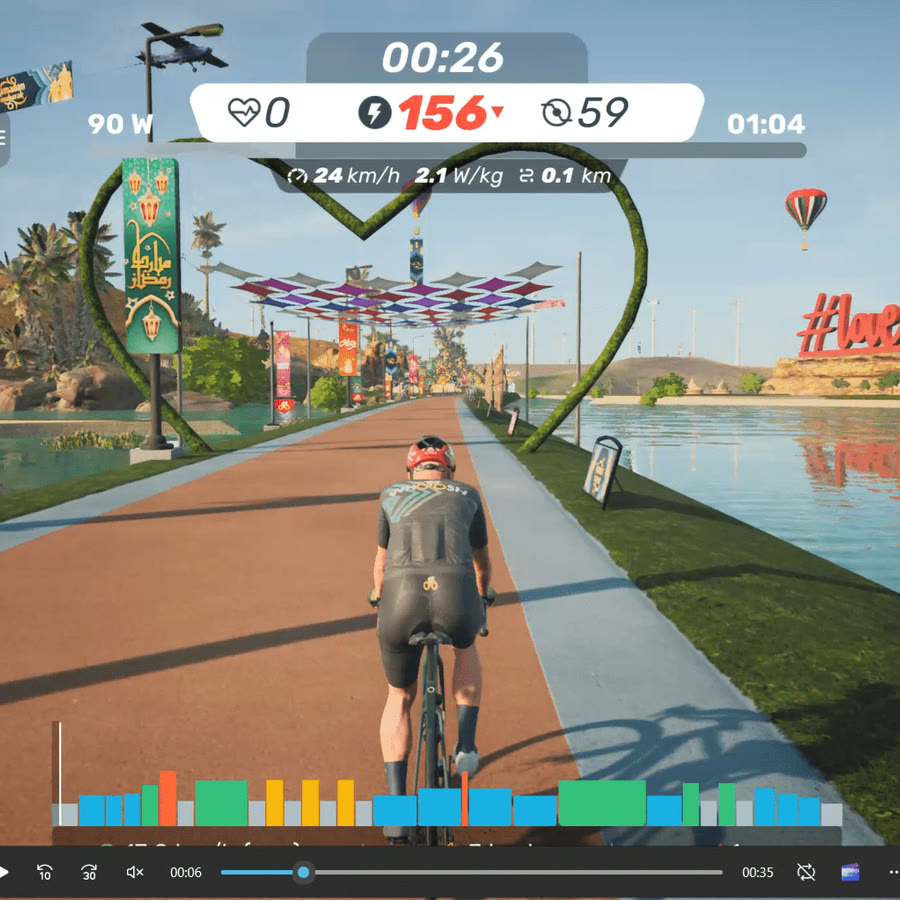
- Boredom-driven cutoffs: riders quit indoor Zone 2 rides early far more often than outdoor ones of the same length. Entertainment (a structured app ride, a show, a group ride at conversational pace) matters more for adherence than almost any other variable.
Pace by power for the first 20-30 minutes, then let heart rate confirm you're still in range for the rest of the ride. Power alone can drift into Zone 3 territory as heat accumulates without you noticing the effort creeping up.
How this fits into a full training week
A polarized week built around this guide, the VO2 max guide, and this one might look like: 3-4 Zone 2 rides of 45-90 minutes, one Norwegian 4x4 or 4x8 VO2 max session, and 1-2 full rest or very easy days. That's roughly 80% low intensity, 20% hard, which matches the split that shows up repeatedly in research on well-trained endurance athletes' actual training distributions.
The mistake to avoid is filling the remaining days with moderate-intensity rides that are hard enough to add fatigue but not hard enough to drive the specific adaptations VO2 max work targets. That gray zone is where most self-coached training plans quietly go to die.
Key takeaways
- Zone 2 is roughly 60-70% of FTP, verified by the conversational-pace talk test, not just a power number.
- Current research pushes back on Zone 2 as uniquely optimal for mitochondrial adaptation; its clearest advantage is high sustainable volume at low fatigue cost.
- Indoor pacing is harder than outdoor pacing: heat buildup drags heart rate up independent of effort, so pace by power early and confirm with heart rate.
- 3-8+ hours per week depending on total training time available, spread across multiple sessions rather than one long ride.
- Pair with 1-2 genuinely hard sessions per week (see the VO2 max guide) and avoid filling the rest of the week with moderate 'gray zone' efforts.
FAQ
Use the talk test: full sentences, no gasping. Pace by power for the first 20-30 minutes since heart rate lags effort, then use heart rate to confirm you're holding the zone as the ride continues and heat builds.